TAKE THE WEIGHT
OFF YOUR SPINE.
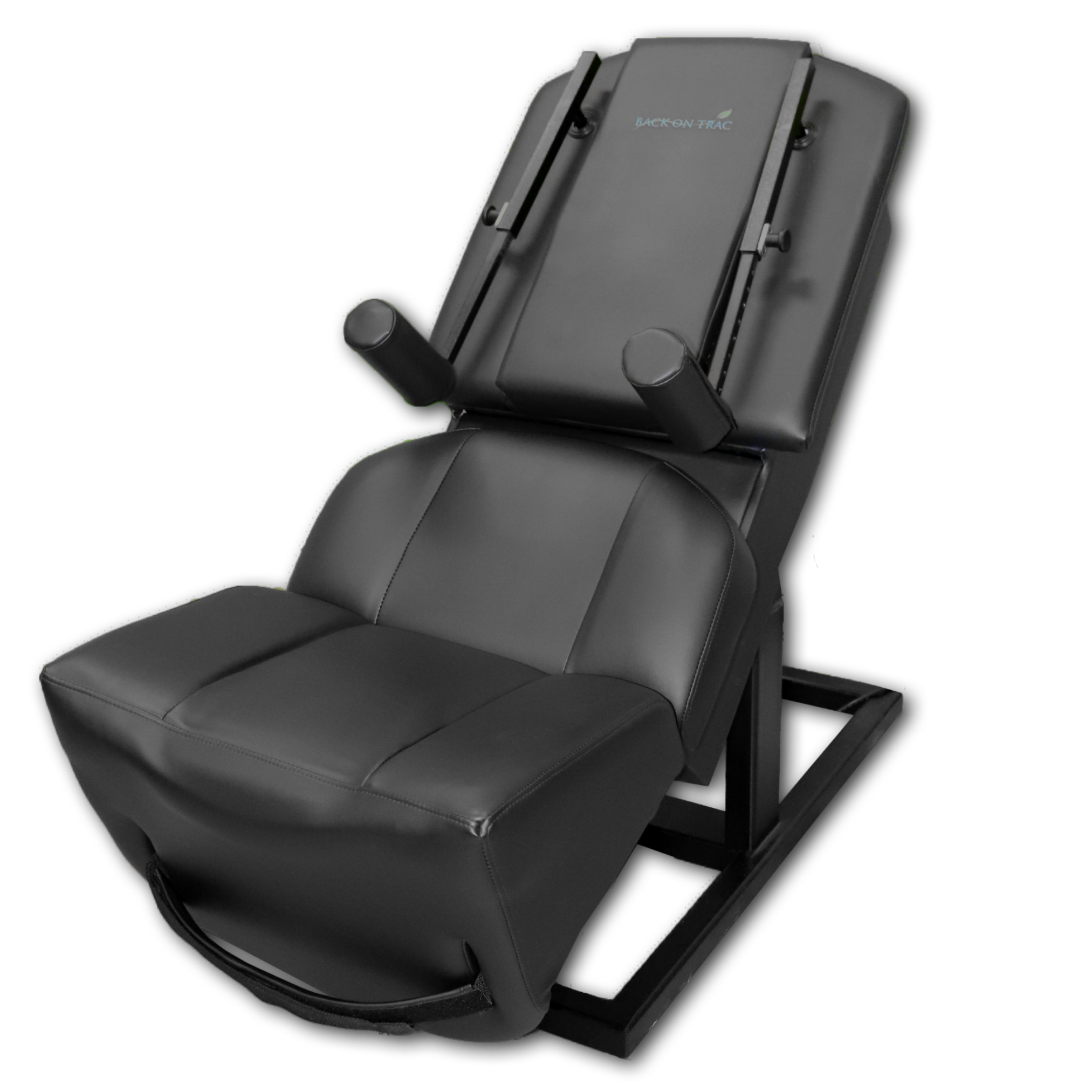
Our computer guided decompression chair gently creates space between your vertebrae, easing pressure on discs and nerves so your body can do what it was built to do: heal. No surgery. No needles. No downtime.
WHY YOUR DISCS ARE UNDER PRESSURE
Picture the discs between your vertebrae as small, water-rich cushions. They absorb shock every time you sit, stand, twist, or lift. Over the years, poor posture, old injuries, repetitive strain, and normal aging squeeze water and nutrients out of those discs. Once that happens, they thin out, lose height, and stop cushioning the way they should. That is when a disc can bulge, herniate, or press directly on a nerve, and it is often the real source behind pain that has not responded to rest, stretching, or over-the-counter medication.
Tap a condition to learn more
A GENTLE PULL YOUR MUSCLES DO NOT FIGHT BACK AGAINST
Here is the part most people never learn: if you simply stretch the spine with steady force, your back muscles instinctively tighten up to protect it. That reflex, known as muscle guarding, is exactly why old-style traction so often falls flat.
Our decompression chair works around that reflex entirely. A computer-controlled system applies and releases tension in a smooth, rhythmic cycle, calibrated to your body and the exact segment of your spine that needs attention. Because the pull never spikes, your muscles stay relaxed and the vertebrae are able to separate gradually.
That separation creates a subtle negative pressure inside the disc itself, pulling bulging material back toward center and drawing in the oxygen, water, and nutrients a compressed disc has been missing. It is a controlled, repeatable process aimed at the actual mechanical cause of your pain, not just the symptom.
This clip could not load. Double check the link is correct and that the file has finished uploading to the GHL Media Library, then try again.
Your spine has 33 vertebrae across five regions, modeled here in 3D. Drag to rotate it, or tap a region below to focus in. Before your first session, we identify exactly which segment is causing your symptoms, so the chair can calibrate its pull to that precise level. 7 cervical vertebrae support your neck and head. Tension and poor posture here often show up as neck pain, headaches, and radiating arm symptoms. 12 thoracic vertebrae anchor your rib cage. This segment moves less than the neck or low back, so pain here often points to posture or joint irritation rather than disc injury alone.
SEE THE CHAIR DO EXACTLY WHAT WE JUST DESCRIBED
Slow, rhythmic, controlled. This is the actual traction cycle from the section above, happening in real time in our clinic.
This video could not load. Check that the file has been uploaded to the GHL Media Library and the link above is correct.
CONDITIONS THE CHAIR IS BUILT TO ADDRESS
Hover a condition to learn more
Herniated or Bulging Discs
Gentle negative pressure encourages displaced disc material to retract, taking pressure off the nerve it has been irritating. Over a series of sessions, this can ease the sharp, localized pain that often comes with a herniated or bulging disc.
Sciatica
Creating more room in the lower back can relieve pressure on the sciatic nerve, calming the radiating pain that travels into the leg. Many patients notice the tingling and numbness ease alongside the pain itself as pressure comes off the nerve.
Degenerative Disc Disease
Bringing hydration and nutrients back to worn discs may help slow the degenerative cycle and ease day-to-day stiffness. It will not reverse the wear, but it can meaningfully improve comfort and mobility as the discs rehydrate.
Spinal Stenosis
Widening the space around compressed nerves can reduce the pressure behind the pain, numbness, or weakness stenosis causes. Patients often feel the most relief in the legs and lower back, where narrowing tends to affect nerves the most.
Facet Joint Irritation
As discs thin, the small joints at the back of the spine take on extra load. Decompression eases that load off the joint itself, which can reduce the stiffness and localized ache that facet irritation causes.
Chronic Neck & Back Pain
Even without a specific diagnosis, ongoing pressure from posture, overuse, or old injury can respond well to decompression. It is often a starting point for patients who know something is wrong but have not gotten a clear answer elsewhere.
WHAT A SESSION IN THE CHAIR ACTUALLY FEELS LIKE
A Real Evaluation First
We start with a thorough exam and a look at your history to confirm decompression is the right fit for your spine before you ever sit in the chair.
Calibrated To You
You are secured comfortably with soft harnesses and the system is set to target the exact segment of your spine causing your symptoms.
20 to 30 Minutes of Gentle Cycling
You will feel a slow, rhythmic stretch, never sharp or forceful. Many patients find it relaxing enough to close their eyes through the session.
Hydrate and Move
Drinking water afterward helps your discs absorb what they just took in. Mild soreness, similar to a new workout, is normal and typically brief.
A Plan, Not a One-Time Fix
Relief builds session over session. Your chiropractor tracks your progress and adjusts your plan as your spine responds.
THE ACTUAL ROOM WHERE YOUR RELIEF STARTS
No stock photos here. Once your own site is built, this gallery shows real photos of your own clinic, set up for a calm, unhurried session from the moment a patient walks in.
HOW IT COMPARES
Decompression sits in a real middle ground: far more targeted than an at-home stretch, and far less invasive than surgery. Tap any row for more on why that matters.
QUESTIONS BEFORE YOU TRY IT
No. The pull is slow, controlled, and rhythmic, designed specifically to avoid the sharp sensation that comes with forceful stretching. Many patients describe the sessions as relaxing.
It depends on your condition, how long you have had it, and how your spine responds. Some patients notice a difference within the first handful of visits, but lasting change comes from completing the full plan your chiropractor builds for you, typically a series of sessions across several weeks.
It is safe for the large majority of patients, but it is not right for everyone. We do not recommend it for people with severe osteoporosis, spinal fractures or tumors, advanced spinal hardware, or during pregnancy. That is exactly why every plan starts with a full evaluation.
An inversion table uses gravity to apply one general, uncontrolled stretch across your entire spine. Our chair uses computer-guided force to target a specific segment with precise, measurable pressure, the kind of precision needed to actually create space inside a compressed disc.
Some patients feel mild soreness after a session, similar to how a new stretch or workout feels. It is typically short-lived. Staying hydrated afterward helps your discs make the most of the session.